
How to Make Coffee: A Detailed Guide
Coffee should be experienced, not as a drink, but as a treat; with its aroma, flavor and energy, each sip is a reward and a treat. If you want to make the ideal cup of coffee, you need to know about coffee beans, coffee grind, water and the methods of preparation. It may seem simple, adding water to coffee, but there are many details to the mix of which may affect the coffee’s flavor. This tutorial will look into the craft of brewing an excellent cup of coffee at home so you may get the fantastic coffee that you’ve been craving.

1. Choosing Coffee Beans
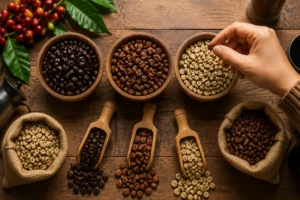
The seed is the source of a good cup of coffee. Coffee beans are the seeds of the coffee cherry, which is cultivated in an area that is known as the “coffee belt” and stretches along the equator. There are 2 main species: Arabica and Robusta. The Robusta has a higher caffeine content than the Arabica beans and is more bitter and aromatic, often with floral or fruity notes.
There are differences in roast levels of beans:
- Medium roast: Fierce, but still retains the original flavors.
- Medium roast: medium amount of acidity and a balanced flavor.
- French Press: This type of coffee is brewed using a French press.Dark roast: The dark roast is strong, smoky and intense, and may mask out some nuances.
Fresh good quality beans should be selected. To maintain flavor, keep in airtight containers, protected from light, heat and moisture.
2. Grinding the Beans
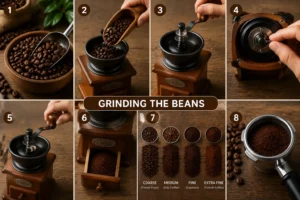
Grind coffee just before serving – it will taste better and fresher. Use the correct grind size for the brewing system:
- Medium: Standard extraction.Fine: Espresso.
- How to use: Drip coffee makers or pour over.
- Fine: Espresso machines.
- Extra fine: Turkish coffee.
Burr grinders make uniform particles, better than the blade grinders. If the grinding is not even, it can cause a bitter or weak cup of coffee.
The state of water quality and temperature.State of water quality and temperature.
The quality of water is important as it constitutes the bulk of coffee. Never use distilled or high mineralised water. The best temperatures for brewing are 195°F to 205°F (90-96°C). Coffee cannot be scalded if it is too hot and it cannot be under-extract if it is too cold.
4. Coffee-to-Water Ratio
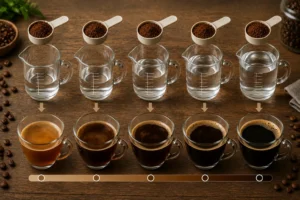
The ratio of coffee to water will have an impact on the strength and flavor of coffee. There is a standard ratio of 1:15 to 1:18 (1 part coffee to 15-18 parts water). As a general rule for example, 20 grams of coffee are used by every 300 – 360 mL of water. Variations in the strength of coffee and water (more or less water depending on the coffee – more or less coffee depending on the water).
5. Brewing Methods
Various flavors can be extracted from coffee beans in a number of different ways. But it’s up to your choice and comfort to choose the best one.
a. Drip Coffee Maker
Drip machines are efficient and simple and are great for creating a number of cups. Fill the reservoir with water, place the medium ground coffee in a paper filter and press the coffee button. Hot water goes through the coffee grounds for the flavor to be extracted. If the filter is used correctly, the grounds can’t get into the coffee.
b. French Press
French press coffee is full-bodied and rich.
Coarsely grind coffee and place in carafe.
Pour in hot water to grinds.
Gently stir and steep for 4-5 minutes.
Push plunger gently down to remove grounds from liquids.
This process emphasises the oils in the coffee, creating a full-bodied and delicious cup.
c. Pour-Over
Pour-over is a concept of clarity and balance.
To remove paper taste use a paper dripper with a paper filter.
Add medium-ground coffee.
Add water in a circular fashion, slowly, when the bulb is in hot water (bloom phase, when it starts to bloom).
Poor a little at a time until a certain amount is poured.
This is a very accurate method of extraction and flavor control.
d. Espresso Machine
Espresso is a high-strength brew of coffee that is made under high pressure to create a thick crema. The fine ground coarsely tamped coffee should be pulled for 25-30 seconds. Espresso is used to make cappuccino, latte and macchiatos.
e. Cold Brew
Cold brew is full bodied and has less acidity.
Blend the coarsely ground coffee with cold water in a jar (at a 1:4 coffee to water ratio).
Chill in the refrigerator for 12–24 hours.
Strain using a fine mesh or coffee filter.
Dilute in water or milk to serve.
Cold brew will keep in the refrigerator for up to 2 weeks.
6. Enhancing Flavor
Coffee is served black or can be made with milk, sugar or spices.
Creaminess, use with milk or plant-based milk.
Add honey or maple syrup to sweeten.
Add spices – cinnamon or nutmeg.
Just a little salt will reduce the bitterness.
Experiment to find the flavor and textures you like the best.
7. Specialty Coffee and Tasting
Whether it’s single-origin beans or specialty roasts, it’s a wonderful opportunity to appreciate the love of a bean lover. Specialty coffees can have a special flavor, like chocolate, berries or floral. Gradually developing palates will allow you to determine what is a good fit and what isn’t, which will help you choose the right bean.
Conclusion
Coffee-making is an art and a science. From selecting the best beans and grinding them correctly, to correctly preparing the brew and cleaning the equipment, each step creates a satisfying cup. Whether you’re a power user of a rich and robust French press or a purist who insists on a clean and pure pour-over or a convenience drinker who likes drip coffee, the fundamentals of making coffee are new things to explore in the morning rush. By taking some time to experiment, practice and pay attention to the details, you can make a cup that you will enjoy, and a drink will become a pleasurable experience.